

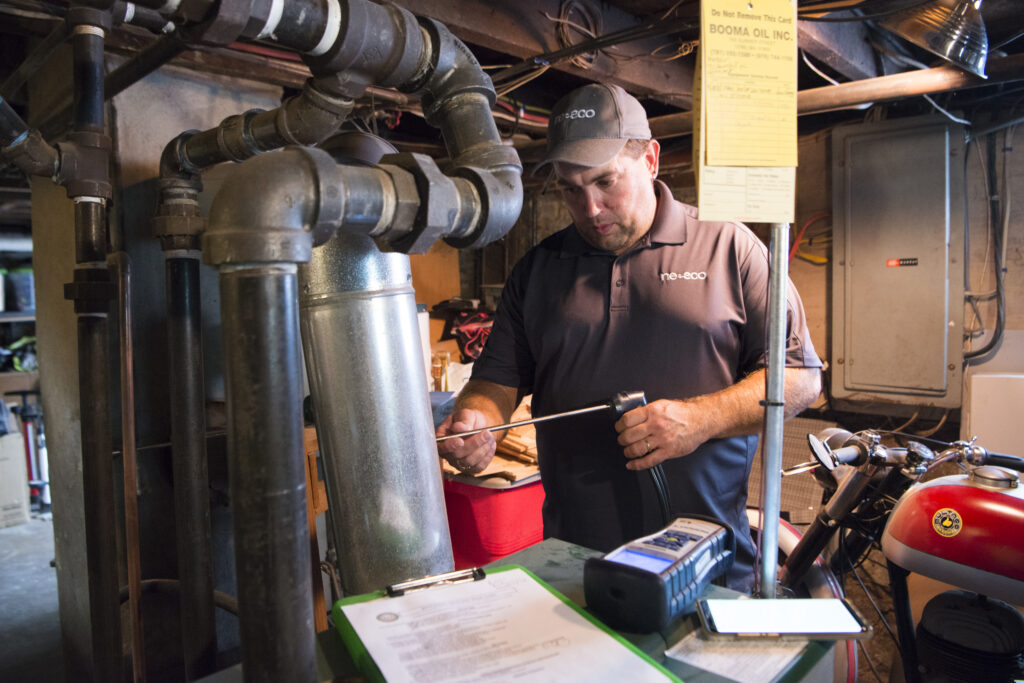
Air-sealing and insulating your home can save an average of 15 percent on heating and cooling costs every year, according to the EPA. For older homes – which comprise a large number of New England’s housing stock – the gains are potentially even larger. Insulation also makes your home more comfortable during the extremes of New England’s icy winters and humid summers.
But making your home less permeable to air transfer requires a few extra precautions before the work starts. Perhaps most important: A combustion safety test to ensure your home appliances aren’t emitting carbon monoxide or are otherwise unsafe and inefficient.
Every no-cost Mass Save home energy assessment includes a combustion safety test, but it’s a good idea to understand what’s involved and why it’s required.
Combustion Safety Test Information and Background
Various household appliances – typically heating and hot water systems, as well gas dryers and ovens – may emit unsafe levels of gas as part of the fossil fuel combustion process. The goal of the combustion safety test is to understand whether these appliances ventilate gases properly and are in good working order.
A combustion safety test can indicate whether appliances pose hazards such as overheating, or whether they’re just operating inefficiently and costing you money. But the primary concern is whether your appliances are venting carbon monoxide or other dangerous gases into the home.
While carbon monoxide detectors can alert you to dangerous spikes in the gas inside your home, this test is more comprehensive and can flag problems before they reach emergency status.
Problem Areas
Atmosphereically vented appliances, or natural draft combustion appliances, draw air from the inside of your home for the combustion process and then vent out the dangerous gases from a flue.
A variety of points in the system may fail or work inadequately. Adverse findings might include:
- Gases spilling out of the appliance or vents into the living space, which is an immediate health hazard
- The appliance generates a weak air draft that can’t expel gases efficiently from the flue, or negative pressure in the appliance that air back down into the appliance envelope
- Bent or obstructed vents
- The appliance doesn’t generate the proper amount of gas pressure, meaning it over- or under-fires
- The temperature of flue gases falls outside the recommended temperature, which may indicate a hazard or inefficiency
- An excessive production of carbon monoxide
In general, the technician is trying to confirm that the appliance system is generating the correct amount of combustion and dilution air. They will use tools to document the carbon monoxide levels, a draft gauge to measure air flow, and a smoke pencil to detect spillage at draft hoods.
What If My Home Fails a Combustion Safety Test?
A number of failure points could result in a failing test, but in general, issues may lie with either the venting system or the appliance’s combustion process. The fix may include clearing blockages from vents or the chimney, creating new vents or openings to improve air flow, sealing leaks to prevent gas spillage, adjusting the gas pressure in the appliance, or replacing malfunctioning parts.
These problems are all fixable, but must be addressed before any other work is completed on the house. In rare cases, the test may reveal hazards that require shutting down the appliance and evacuating the house until the problem is fixed.
If your appliances don’t pass a combustion safety test, you definitely want to know about it for your own safety. But once you get an all-clear, you can proceed with making your home more comfortable and efficient with air-sealing and insulation.
The test may also serve as a reminder to gradually phase out fossil-fuel appliances in your home – for example, it may be a good reason to look into heat pumps instead of gas-burning equipment.
Have questions about combustion safety tests or ready to ensure your appliances are working their best? Call (781) 309-7540 or contact our team to schedule your no-cost home energy assessment today.