

Many of Massachusetts’ older homes are lacking insulation. As a result, they have uncomfortable and inconsistent indoor temperatures, moisture and mold problems, and expensive energy bills. Luckily, insulation can be easily retrofitted to most homes, helping families overcome these challenges.
But how do you know if you need insulation, what types should you install, and where can you find reputable home insulation companies near you? Keep reading to get a complete understanding of home insulation and the next steps to take if you’re interested in upgrading.
Signs You Need Better Insulation
Since insulation is tucked away in hidden areas of the home, it’s hard for a homeowner to visually determine that they need more of it. Instead, they’ll normally experience a few symptoms that suggest their insulation is lacking:
- High Energy Bills: If your friends, neighbors, and family all report significantly lower heating and cooling bills, or yours are rising at an alarming rate, there might be a problem with your insulation.
- Frequent HVAC Use: If your HVAC system is running constantly and seems to have problems cycling off, poor insulation may be to blame.
- Temperature Differences: Does one area of the home stay comfortably heated during the winter, while another area is always cold? This points to lacking insulation.
- Ice Dams: Ice dams form when heat escapes through an under-insulated attic and up to the underside of the roof, and melts rooftop snow.
- Condensation, Humidity, and Mold: Insulation serves as a thermal barrier in the summer also, keeping hot and humid outdoor air out. If your insulation is lacking, this air can find its way inside, increasing the humidity of your home and causing problems with mold.
Best Places to Add Insulation in Your Massachusetts Home
- Attic: This is where most heat energy escapes in the winter, because heat often gravitates toward colder temperatures at the top of your home. Insulation can be added to the rafters, to knee walls, or between the ceiling joists. In the summer, attic insulation prevents the sun’s heat from beating down into your home.
- Basement/Crawlspace: Your foundation is a prime location for energy loss. Adding insulation to the rim joists above the foundation walls and the floor joists (in unconditioned basements) are two of the most effective spots to upgrade.
- Walls: Walls typically already have some form of insulation, but sometimes the materials break down, settle, or compress over the years. Wall insulation can be added to strategic areas when required, through a small hole between the studs.
The EPA estimates that homeowners who add insulation to attics, floors over crawlspaces, and basement rim joists save up to 15% on annual heating and cooling costs.
If you’re unsure about where your home is lacking insulation, a Mass Save® Home Energy Assessment is your first step. This no-cost service uses diagnostics like infrared cameras to determine where you need insulation the most.
Types of Insulation
The type of insulation you use will depend primarily on which area of the home you’re planning to insulate. Generally, you can pick from cellulose, fiberglass, or spray foam insulation, and they can be mixed and matched based on the results of your assessment.
Fiberglass, frequently installed as batt insulation, is one of the most affordable options. It’s used along rim joists in the basement and can also be installed in other areas of the home that have large gaps in coverage.
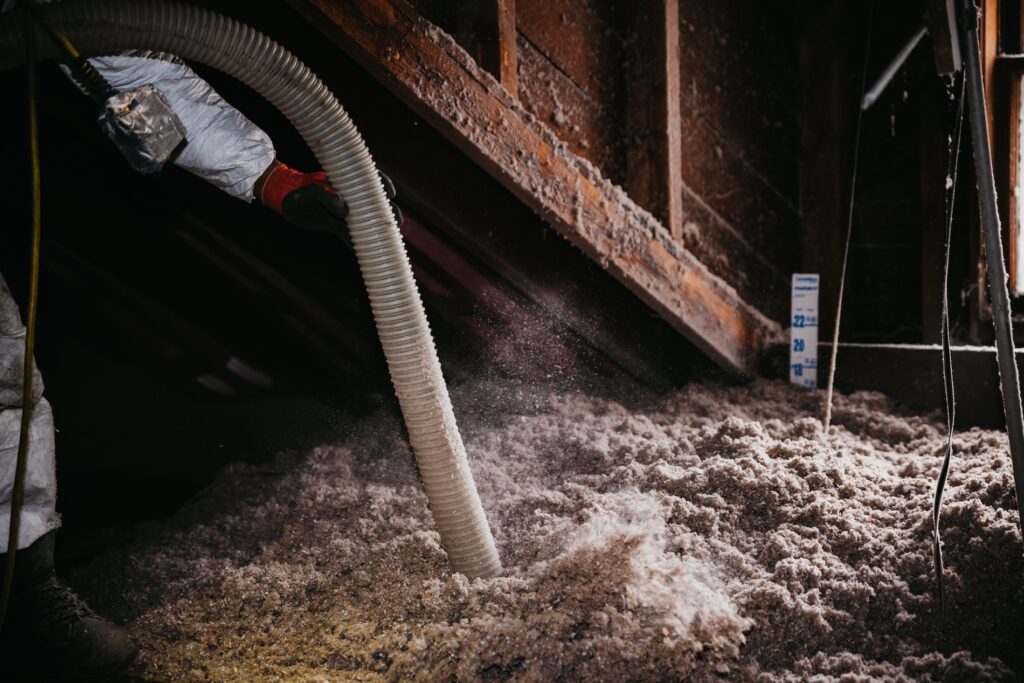
Cellulose is one of the most commonly used materials. It’s blown into attics and walls, making it versatile for many applications. It’s made from fire-treated paper fibers, so it’s environmentally friendly, safe, and deters pests better than fiberglass.
Spray foam insulation is a high-performance insulation material and is the choice for Massachusetts homeowners who want to insulate and air seal their home. It’s useful for hard-to-reach areas and provides some of the highest insulating value of all materials. However, it’s not available for Mass Save rebates.
Understanding R-Values
Insulation is rated by R-value. It’s the measurement of how well the insulation resists heat flow. The higher the R-value, the more effective the insulation is. Closed-cell spray foam insulation normally has the highest R-value per square inch, but it’s more expensive. Cellulose and fiberglass have similar R-values. The higher the R-value, the less material you need to meet building code requirements.
R-value requirements depend on which part of the home you’re insulating, and which climate you live in. Massachusetts is within the 5a IECC climate zone, so R-60 is recommended in the attic, and R-30 is recommended in the floors. Your insulation contractor can help you figure out if you currently meet these levels and how much more is needed to meet your comfort preferences.
How You Can Receive Up to 100% Off Insulation Improvements
The Mass Save program provides a no-cost home energy assessment to determine where you need insulation, no-cost air sealing to close any gaps, and up to 100% off cellulose or fiberglass insulation upgrades, depending on your income level and the results of your assessment.* To qualify, you must:
- Be a homeowner or renter who lives in a one- to four-unit home.
- Complete an initial Home Energy Assessment.
- Complete your upgrade with approved insulation contractors near your home.
Neeeco has been partnered with the sponsors of the Mass Save program since 2016, and we have helped thousands of Massachusetts families save millions in costs. We offer a range of insulation services and materials to help you enjoy lower utility bills and a more comfortable home all year-round. Your first step is to contact us for a Home Energy Assessment.
*Some restrictions apply. Offers are subject to change or cancellation. Visit MassSave.com/HEA for full details.