

Uninsulated walls are surprisingly common, especially in older houses. They can cause serious comfort and energy efficiency issues, but many people are under the impression that insulating existing walls is a major hassle, so these issues persist.
The good news is that this isn’t always the case. You can absolutely add insulation to existing walls, and doing so has many benefits.
If your house needs better insulation, Neeeco can help you save 75-100% off an insulation upgrade with Mass Save® rebates*. Schedule a no-cost Home Energy Assessment today to get started.
*Some restrictions apply. Offers are subject to change or cancellation. Visit MassSave.com/HEA for full details.
Benefits of External Wall Insulation
The most important places to insulate in your home are typically the attic and basement or crawl space, but that doesn’t mean you should ignore your walls, especially if they don’t have any insulation. Adding insulation to existing, exterior wall cavities can lead to many benefits, including:
- Improved Comfort – Insulating exterior walls can create more consistent room-to-room temperatures and fix problem areas like a room that’s always too hot or too cold.
- Energy Savings – Upgrading your wall insulation can help reduce energy loss, leading to better energy efficiency and lower heating and cooling costs.
- Noise Reduction – Insulation has soundproofing properties and can help dampen noise. If you live on a busy street, installing wall insulation can make a huge difference.
- Environmental Impact – The better insulated your house is, the less energy you’ll use to heat and cool it, which reduces carbon emissions.
Benefits of Internal Wall Insulation
You can also insulate interior walls, but for different reasons. Since internal walls are not adjacent to the temperature swings of the outdoors, insulating them won’t help with heat transfer. It won’t significantly increase your home’s energy efficiency or make a noticeable difference in your utility bills. However, it does improve soundproofing.
Without insulation in your internal walls, they act like a drum, reverberating noise from one room to another. Internal wall insulation prevents you from hearing everything that’s going on inside your home, and it can also help reduce outdoor noise.
Ways to Insulate Existing Walls
There are a few ways to insulate your existing walls: retroactively with blown-in insulation or injection foam, or during a renovation when your wall cavities are open.
Blown-in Insulation
The easiest way to insulate walls without tearing down drywall is to install blown-in insulation. Blown-in can be added from either the inside or outside of your home. Installing it from outside of your home is the least invasive option, but installing from the inside can be the best route for some homes, depending on the specifics of the project.
Blown-in insulation uses cellulose insulation, made from recycled wood fibers. It’s environmentally friendly, fire-resistant, and pest-resistant. Exterior blown-in insulation is used for the exterior walls of your home that separate the living spaces from the outdoors. Interior blown-in insulation is used for walls inside your residence to help with soundproofing.
Injection Foam
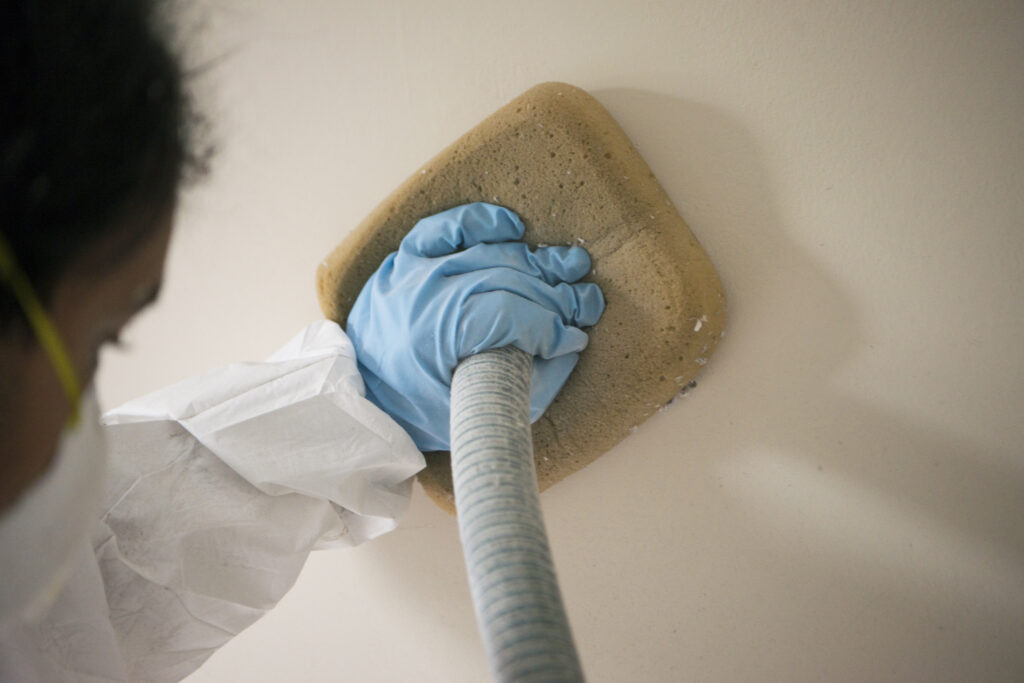
Installing interior blown-in insulation is a similar process. To blow insulation into existing walls from the inside, we drill small holes into the drywall. Then, we insert an insulation hose into the holes and blow loose-fill insulation into the wall cavity. When the installation is complete, the holes can be patched up and painted over. It’s not an entirely noninvasive process, but it’s much less messy and intensive than tearing down drywall.
Install Injection Foam
Existing walls can also be insulated with injection foam. Installing injection foam is similar to installing blown-in insulation in that we drill small holes into the drywall. But injection foam is different from loose-fill insulation. It’s injected into the wall cavity as a liquid, which then expands to fill the cavity and hardens into place.
The benefit of injection foam is that it fills every crack and gap and acts as both an air sealant and an insulator. But foam insulation is permanent and cannot be removed, so it’s important to make sure it’s the right option for your home before installing it. It’s important to note that insulation removal and foam insulation are not eligible for Mass Save incentives.
Insulate During a Renovation
If you’re planning a renovation that will involve opening up walls, it may be best to wait until your renovation to insulate walls. When the walls are open, you can install insulation materials that can’t be blown in, like fiberglass batts or rigid foam boards, so this approach gives you more options. It also allows you to address any underlying issues at the same time, like outdated knob-and-tube wiring that needs to be replaced.
How to Add Insulation to Walls
Most Massachusetts homeowners choose blown-in insulation for its ease of installation, affordability, and rebate eligibility. We use a similar process for both exterior and interior applications:
- Drill a Small, Discreet Hole: To blow insulation into exterior walls from the outside, we remove a piece of the siding and drill small holes into the wall at regular intervals. If blowing insulation into existing walls inside the home, we’ll drill a hole into the interior drywall.
- Insert Hose and Add Insulation: We insert an insulation hose and, using a special machine, blow loose-fill insulation into the wall cavity. It falls to the bottom of the wall and piles up, filling the entire space.
- Patch and Reinstall Siding: After the insulation is added, we patch up the holes. If done inside your house on the drywall, we sand, prime, and color match the paint for a smooth finish. If done from the outside of your house, we reinstall the siding over the patched hole so it’s not visible.
Start with a Home Energy Assessment
Before you can decide whether you should upgrade your home’s insulation, you need to find out how much insulation you currently have and where it’s located. Neeeco offers no-cost Home Energy Assessments to help with this process.
As part of your comprehensive, whole-home assessment, we’ll inspect your insulation and evaluate its effectiveness. Then, we’ll recommend the insulation and air sealing upgrades that will be most effective for your home.